
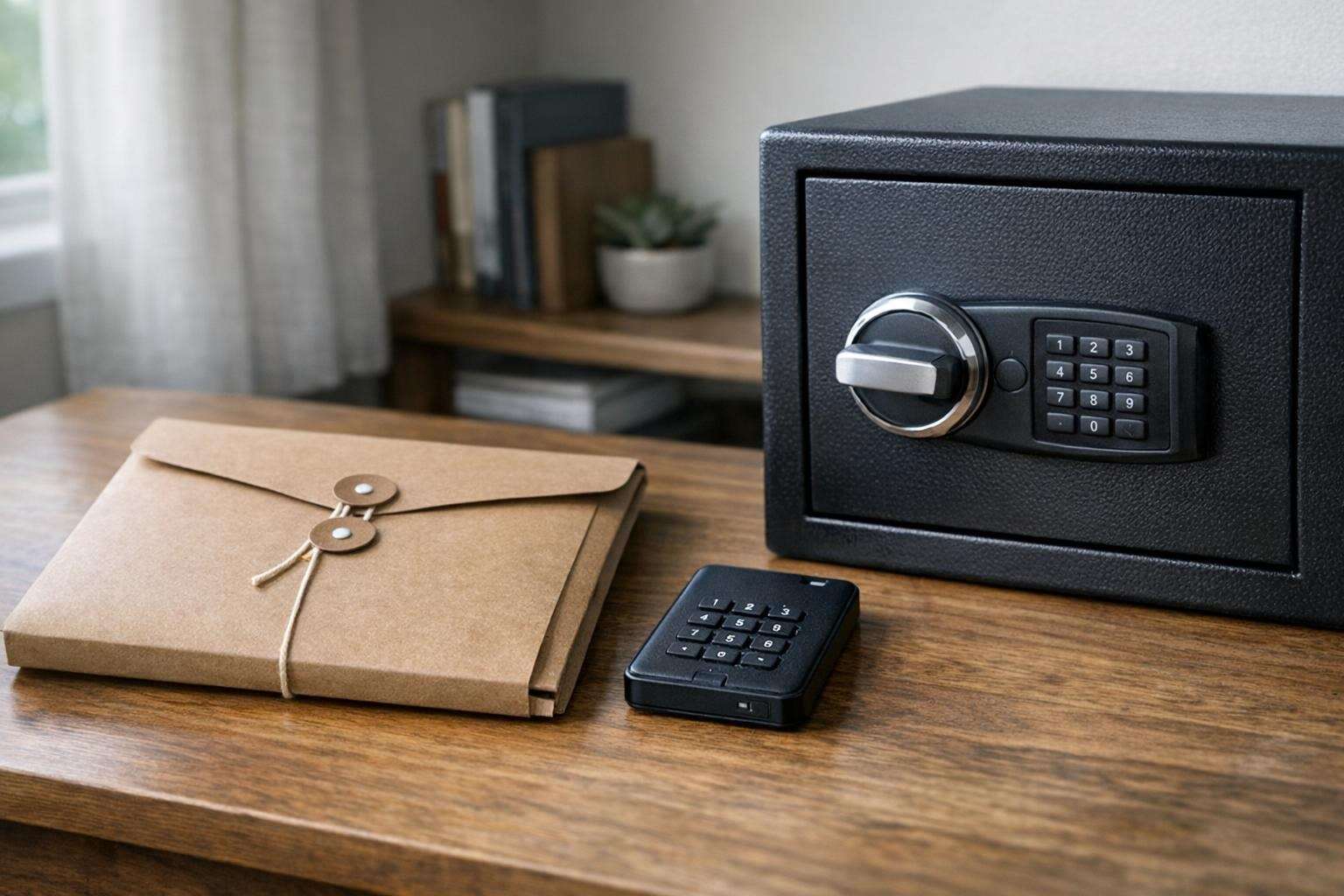
There's no use to keeping a list of firearms in your household if it isn't accurate, isn't protected and cannot be reviewed in short order. Typically, the household firearm list is completed when a new firearm is purchased and then is never looked at again as other firearms are purchased, as accessories are purchased, as work is done to maintain firearms. This sensible system of recording information as it relates to firearms in the household will help to keep confusion at bay and eliminate the risk of unnecessary privacy disclosure.
Decide what belongs in the record
Keep the required details for managing and for identifying items. That includes manufacturer, model, caliber or gauge, serial number, date of acquisition and seller or transfer documents. Add any other relevant documents such as receipts, owner's manuals, and warranty information. Do not include excessive personal or sensitive information for storage of accessories, reference to spare parts or retrieval of otherwise lost items.
As for where to store the safe or container, ideally this information would be stored separately from the rest of the identifying information for the equipment in the safe. Using a private reference code for a "safe" or "container" rather than listing out the exact storage location for the equipment in the safe, and storing the corresponding key or code separately from the rest of the information for that piece of equipment would help to meet this objective.
Remember, ownership records are distinct from access information. Don't store combinations, keys, lock-release info, alarm codes, etc. in the same list that you use to keep track of identifying information for guns and gear. Even in digital storage, a strong password and proper device security are not enough on their own. Hard copies must be stored with the same level of care and in secure locations. Instead of storing entry codes on a printout on a desk, for example, store them in a locked cabinet or safe.
Build privacy into digital and paper storage
In selecting applications for the recording of gun safety information, consideration must be given to the privacy settings, account recovery and information sharing settings. In addition, the user must have a good understanding of how the system will function and be able to secure the information. The user must only use applications that can be secured by the user. An unencrypted spreadsheet on a personal computer or synced to multiple personal devices is not secure simply because it is convenient.
An offline list to update from time to time could suffice. Store a current copy in a safe location and define in advance how updates will be made to include purchases, transfers, sales, loss of a firearm and changes to persons that have access to the safe and firearms. Make sure any backups are also secure, such as an encrypted file stored elsewhere, rather than an unencrypted file that has been emailed to yourself.
Consider how various ordinary circumstances may expose information you did not intend to share. For example, keeping a phone unlocked while it is in your purse or keeping a printer in a readily accessible location in your home could lead to the disclosure of identifying information. Also be sure to not post identifying documents or pictures of documents online, even for a short time. Automatic photo backups of temporary printouts of paperwork can reveal identifying information for long periods of time.
Use gun safe organization to reveal problems early
A well-organized safe helps reveal problems early. By storing your firearms and other gear in a particular location and organizing them in such a way that they can be easily identified, you'll be able to quickly determine if you're missing something. Ideally, ammunition and other accessories should be stored in accordance with the manufacturer's recommendations, as well as all applicable state and local laws.
Don't jam too many guns into a safe. Doing so could cause serious damage in the long run. Arrange your equipment so that each gun has its own space. The storage of related items, such as ammunition, ought to comply with the manufacturer's instructions, as well as with local regulations. Don't press the tabs of gun cases, nor enable ammunition to come into contact with other things. Don't allow surfaces to come into contact. Don't allow firearms to be stored dirty.
However, there is no need to perform an in-depth inspection of the firearms. Simply take a glance around the safe to verify for any signs of moisture, corrosion, any loose or damaged parts, deteriorating cases, etc. Make sure all of the records for the firearms are current and that they accurately list all of the firearms that are in the safe.
Reconcile records after every change
Your biggest risk will be updating the record after the item has left the home (e.g. storing for a friend). Have a process to accurately and timely update the list (for example, add, move, remove). Don't allow the record to become too voluminous with details regarding parts/accessories (identify if they affect documentation for insurance, servicing, etc.). If you have numerous spare parts, make a separate reference list.
Reconciling a record of the items in your collection with the items actually in your possession on an occasional basis can also reveal other problems such as worn or damaged safe warning signs, damaged locks, damaged safe interiors, wearing of holsters, failing of lights, failing of opens, or weakened safe structures. Reconciling a record of your items with the items in your possession is also a very good way to verify whether or not an item has been stolen or lost. Call the police to report any losses or thefts as required by local law.
Duties relating to transfers of firearms, reporting, storage and documents vary from jurisdiction to jurisdiction. A private record is not a substitute for the various documents and procedures required by law for matters such as transfers, sales, inheritance, loss, theft or unknown ownership. Seek out the current advice of the relevant authority or qualified local firearms expert in such cases.
Set a review trigger that fits real life
An event-based review, set by the owner, is more practical. For example, after you have bought or sold a firearm, moved to a new house, replaced a safe, had equipment serviced, or handed over firearms to another family member, review the data in the list. Also check after you have scanned, shared or transferred sensitive data to a new device.
Don't turn record-keeping into a task that is too onerous to continue. A current and partially complete record is far better than a largely complete but currently useless document. Keep the review simple and therefore practical. At the end of the process check that the list is up to date, that the access information is separate from the rest of the information on the list, that the information suggests that storage is satisfactory and that sensitive information is still under your control.
Privacy is a key part of safe and responsible gun ownership and needs to be considered in the choice of any firearm record. Its main purpose is to provide the gun owner with a list of his/her firearms to help identify them, to maintain them and to account for them. By keeping a few simple checks in place, ordinary clutter can be prevented from becoming a safety problem.